Bespoke keratin bonds & texture matching
I don’t just match colour. I match behaviour.
I work only with bespoke keratin bonds because strand-by-strand preparation gives me the control to respond to your natural hair.
I do not offer tapes, wefts or nano rings. That is not because they can never suit anyone. It is because keratin bonds fit how I work.
Every strand can be prepared and placed for the colour, texture, density and movement of the hair it will sit beside.
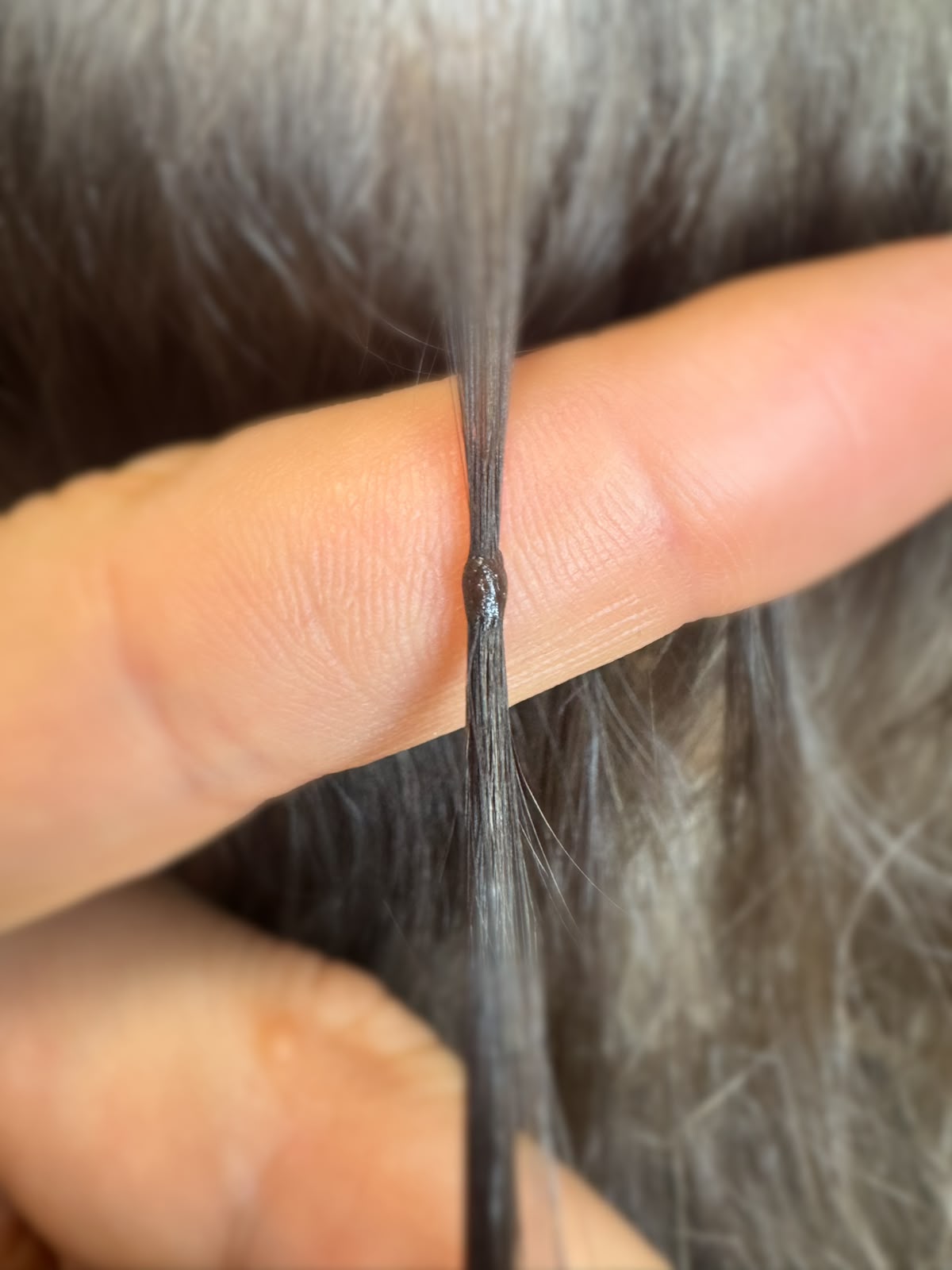
Strand by strand
What I can adjust
Working with loose hair rather than factory-made pre-bonded strands means I am not limited to one standard attachment repeated across the whole head.
The preparation changes according to the hair, the area of the head and the job that strand needs to do.
Each strand can be considered individually
- Amount of extension hair
- Amount of keratin
- Finished bond size
- Placement
- Distance from the hairline
- Colour combination
- Texture
- Direction
- Keratin colour
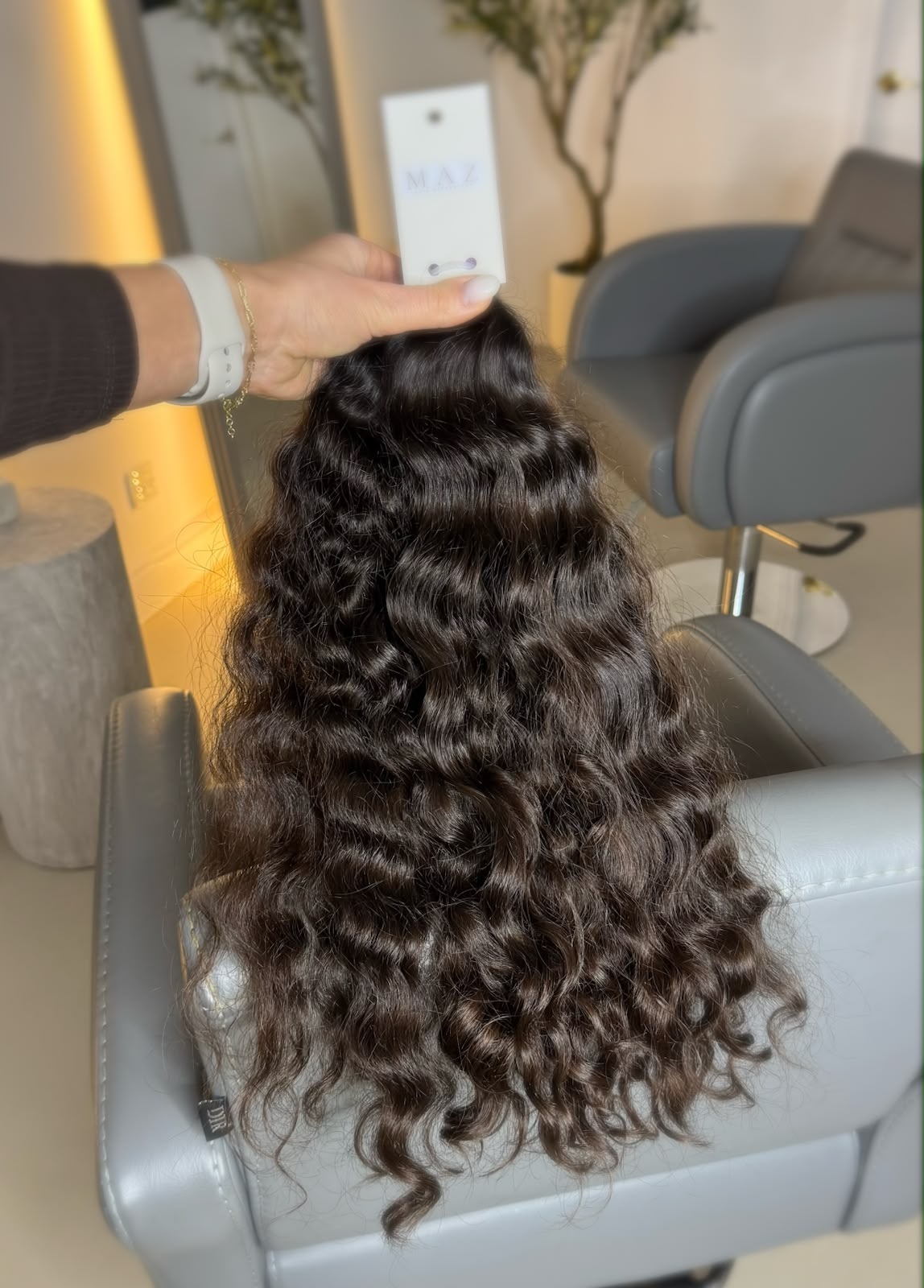
Texture as a spectrum
Straight, wavy and curly are not three exact categories
Texture is a spectrum, and one head can hold several patterns. Hair may be straighter underneath, more defined through the visible upper areas or behave differently around the face.
Sometimes I combine several textures in one set. The aim is for the extensions to work with your natural hair rather than asking your natural hair to change for the extensions.
Before preparation
I wash the hair before I trust the texture
I wash every bundle myself before preparing it. I need to see how it behaves after water, how much it expands and whether the pattern stays consistent.
A fitting-day finish can be styled. Washing shows me what the hair will actually do when you live with it.
The first wash matters more than the fitting-day photo.
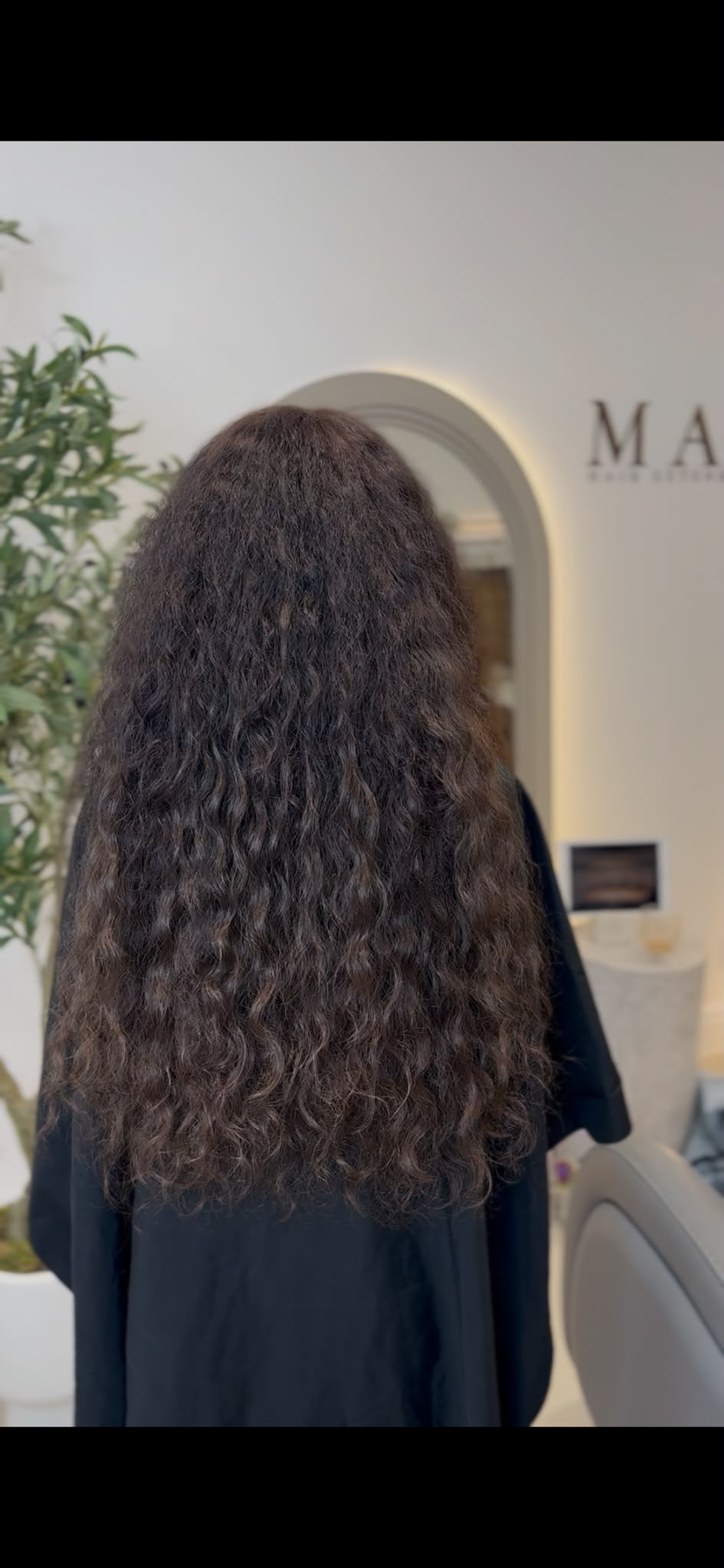
Naturally curly hair
Curly work has to be planned from the beginning
Shrinkage changes how length is perceived. Placement affects how curls fall and separate. Curly hair cannot be planned as a straight fitting and curled afterwards.
I plan with the hair dry and consider the areas where the pattern, density and direction change.
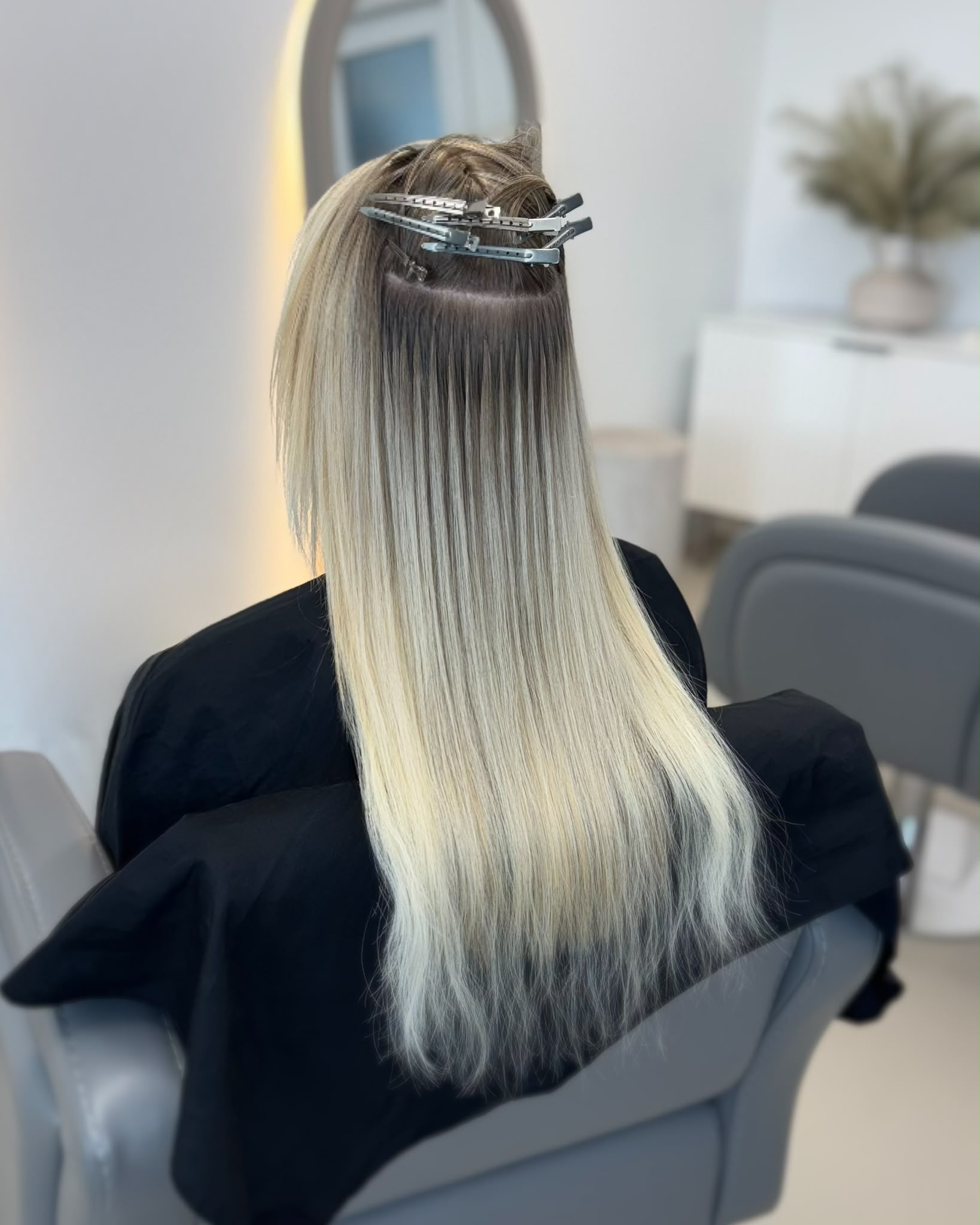
Placement for textured hair
What I look at while planning
- Where the curls separate
- Where the hair expands
- Shorter areas
- Growth direction
- Density changes
- The parting
- How the hair behaves when dry

Bond size and placement
Small bonds are only the beginning
The hair at the temples, sides and hairline is finer and more delicate than the hair through the back. Using identical strands everywhere ignores that difference.
I customise both the amount of extension hair and the amount of keratin per strand. Too much keratin makes the attachment larger and heavier than it needs to be.
Tiny bonds are important. But tiny alone is not enough. The strand also needs the right amount of hair, the right position and the right direction.
Fine hair and delicate areas
When less creates a better result
Fine hair, short sides and delicate hairlines need particular care. The goal is not to fit the maximum amount of extension hair possible. It is to create the right balance.
Sometimes the right recommendation is less hair, a different length or more frequent maintenance. Sometimes it is not fitting extensions at all.
What your natural hair can comfortably support comes before the amount of length or volume you would like to add.
Colour matching
Building colour rather than choosing a number
Natural hair is rarely one colour. I mix extension colours by hand rather than relying on one factory shade.
If your hair is lighter through the top and darker underneath, I want to recreate that variation rather than cover it.
A perfect colour match in the wrong texture is still the wrong match.

Hair selection and sourcing
The country on the label does not tell me whether the hair is right for you
I source hair from Ukraine, Russia, Uzbekistan, Kazakhstan, Iran, India and Vietnam.
Where it comes from is only one part of the information. I look at its natural texture, strand thickness, density, colour, movement, condition and how it behaves after washing.
The hair has to be right for your natural hair, not simply come from a particular country.
Your natural hair comes first
A bespoke plan begins with seeing how your hair behaves
I consider your texture, density, haircut, hairline, growth patterns, natural movement, colour and what your hair can comfortably support.
Send your enquiry with clear photographs and I will review your hair personally before consultation dates are discussed.
