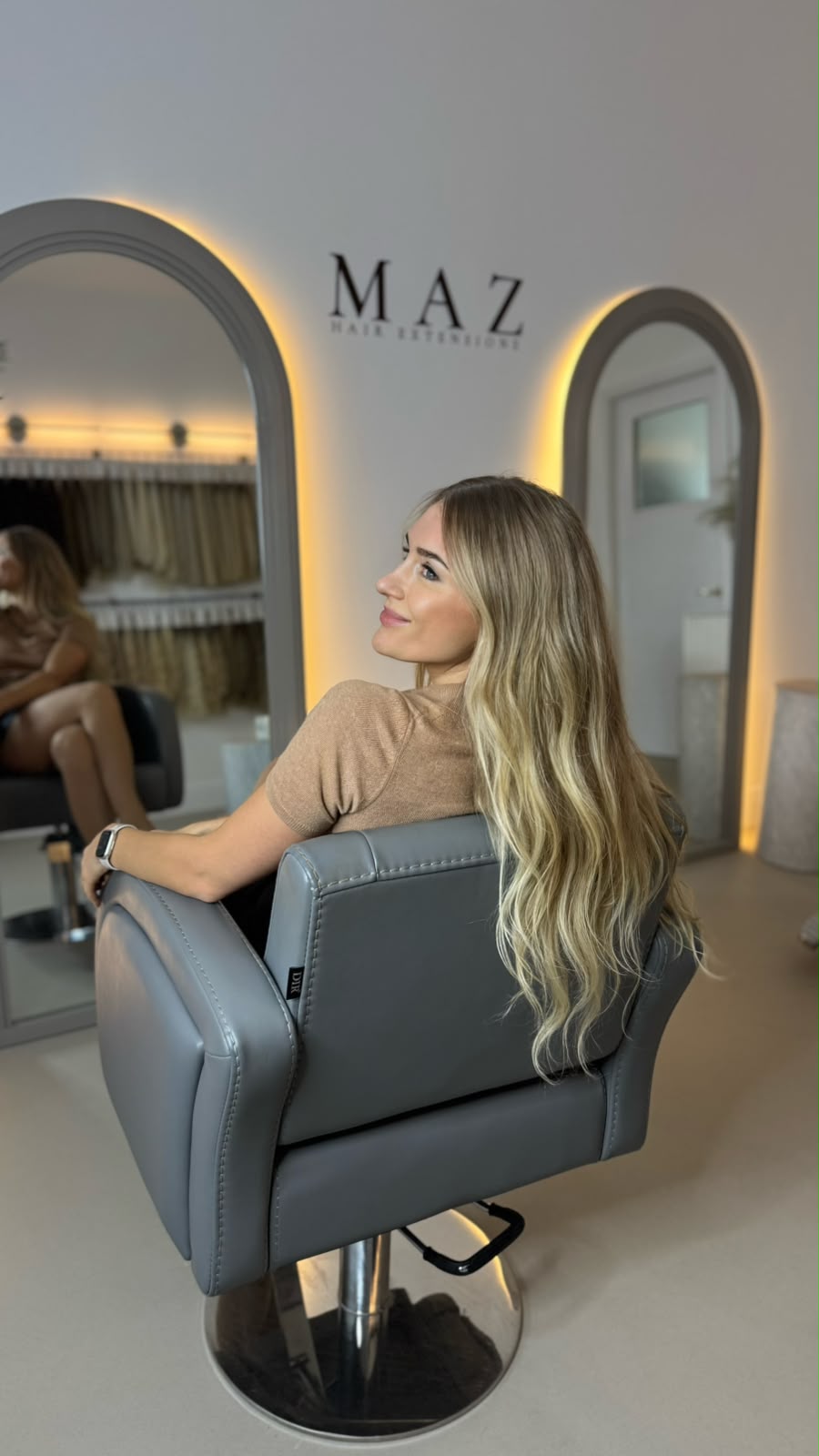
Bespoke keratin bonds · Telford
The real test isn't the photo you leave with. It's the first wash.
Anyone can make hair look right under studio light for an afternoon. I match extensions to the texture of your own hair, so that when you wash it, dry it and live in it, the join still disappears.
Private studio in Telford, UK
More than a colour match
Colour is the easy half of the job.
Most extension work is chosen from a shade chart and stops there. That is why so much of it reads perfectly in a mirror and then separates the moment the hair is washed and left to dry on its own.
Hair is a protein filament that grows from a follicle in the dermis. It is a material, and every head of it behaves differently. Texture is what gives you away: how much bend the hair has, how it swells when it dries, how the ends behave once there is no brush in them. If the added hair doesn't move the way yours does, no colour match in the world will hide it.
So I start with your texture, and match colour into it. Not the other way round.
The material change
Why texture matching matters so much to me
Because I have seen what happens at home, three days later, when the styling has dropped out and the hair is doing what it actually does. That moment is the honest one. Everything I do in the studio is aimed at it.
A perfect colour match in the wrong texture is still the wrong match.
Three days later
The first wash
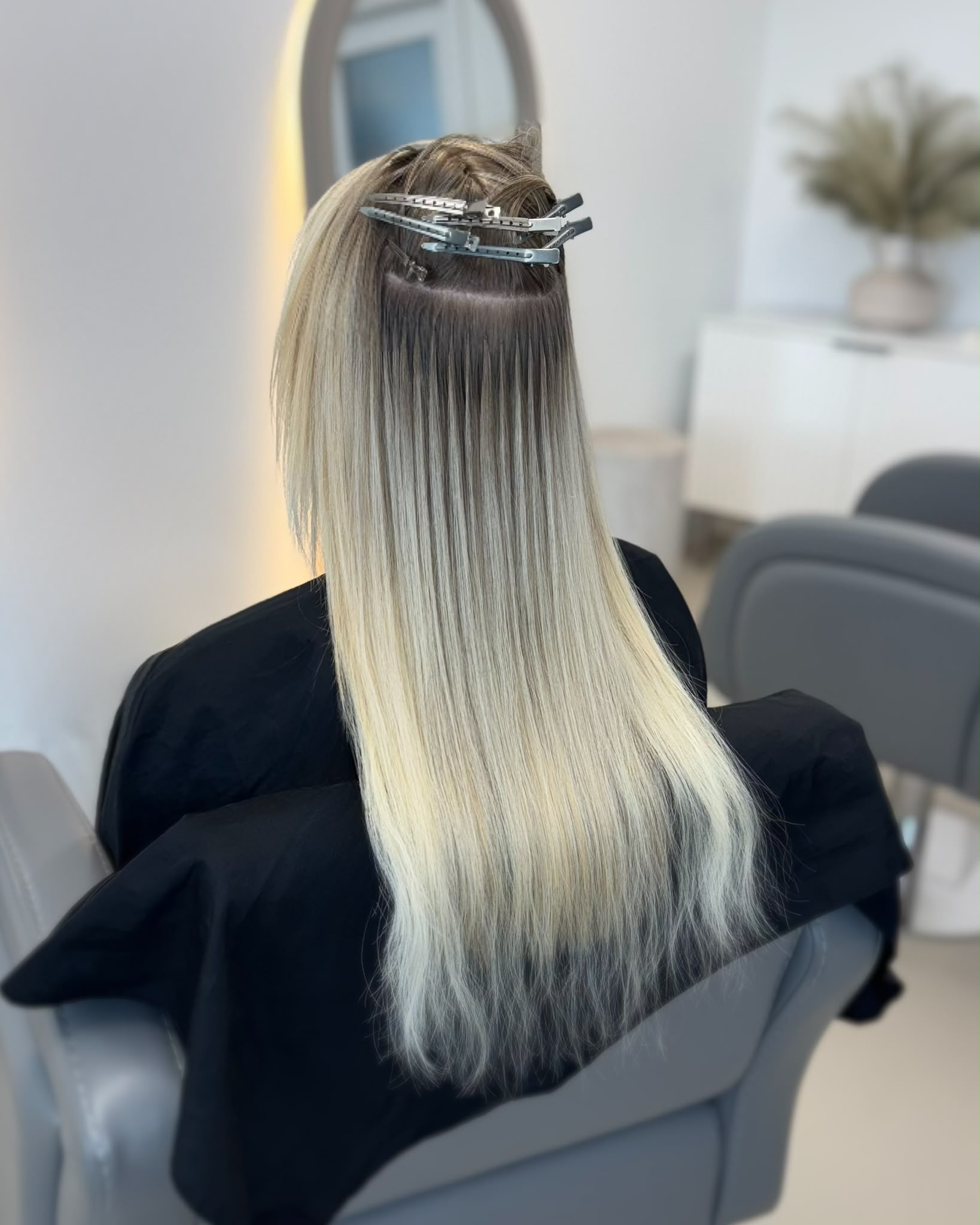
Washed, left to air-dry, not touched. This is where a match either holds or falls apart, where added hair either shrinks up with your own or hangs straight through it. I would rather show you this than a photograph taken ten minutes after a fitting.
Photographed air-dried, no heat, no product. Every result on this site is shown the way the hair behaves on its own.
A different approach
I fit keratin bonds, and only keratin bonds.
Not because it is the only method that exists, but because it is the one that lets me change something for every strand: the amount of hair in the bond, the size of the bond, where it sits, which direction it falls. Wefts and tapes commit you to a row. Individual bonds let me build around the way your hair actually grows.
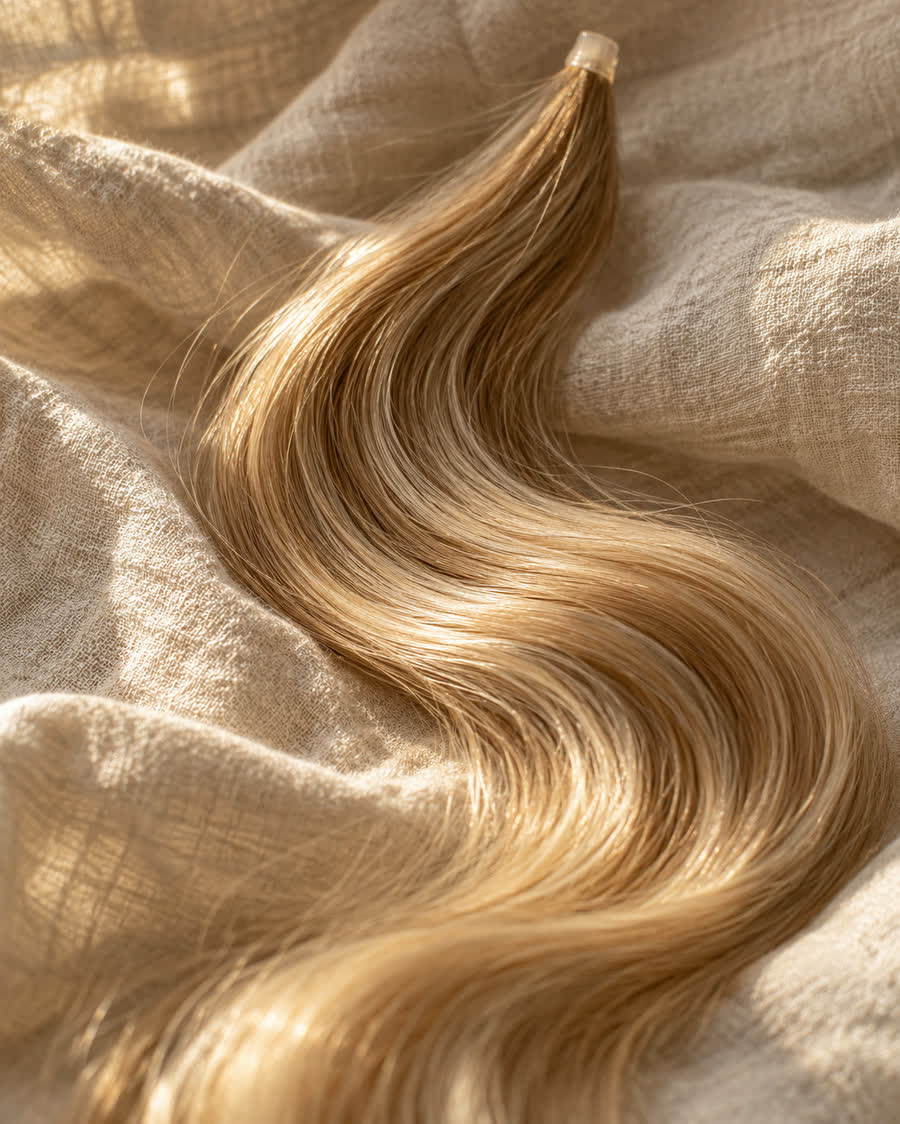
Keratin is also the same family of protein your own hair is made of (alpha-keratin), which is part of why a well-sized bond sits quietly against the root instead of announcing itself.
It is slower work. It is the only way I am willing to do it.
The bond itself
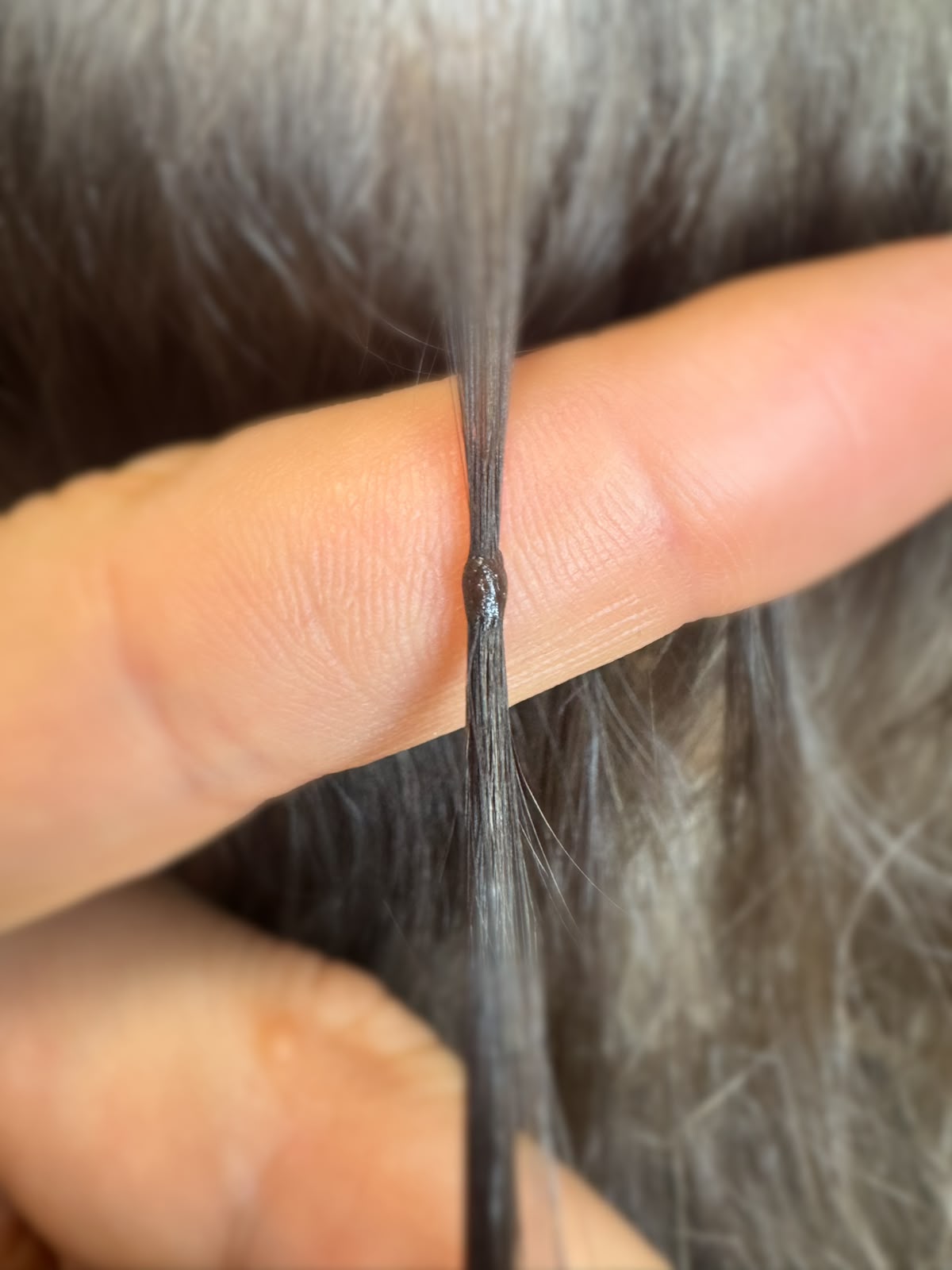
Tiny bonds. Different sizes. Different jobs.
A bond is not one thing. Around a fine hairline I want the smallest bond I can get away with, holding barely any hair. Through the mid-section, where the weight has to be carried, I want something larger. The same head will take several sizes before I am finished.
Get it wrong and you feel it: a bond too heavy for the hair it is attached to, sitting where you part, or a bond so small it will not hold the length you asked for. Get it right and you stop noticing them entirely.

Why keratin
Hair is one of the distinguishing characteristics of mammals, and almost everything people care about (growth, type, care) comes back to the fact that it is a biomaterial before it is a look. I work with it on those terms. A keratin bond is chosen to sit with the fibre it is attached to, not clamped on top of it.
Designed around your hair
Ten things I am deciding
before I fit anything
- Your natural textureMeasured against yours, not the nearest thing in the drawer.
- Curl pattern and shrinkageHow much length disappears the moment it dries.
- Bond size, section by sectionSmaller at the hairline, larger where weight is carried.
- Planned placementAround how you part it, tie it up and wear it.
- Density through the endsSo it thins out naturally instead of stopping in a line.
- Colour, built from more than one shadeBecause your hair is never a single colour.
- Hair selection and sourcingChosen for your hair, from the library, not off a shelf.
- Fine hair and delicate hairlinesWhat can be carried, and what honestly cannot.
- How you wash and dry at homeAir-dried, rough-dried or styled, it changes the match.
- The 8–10 week cyclePlanned from the first fitting, not worried about later.
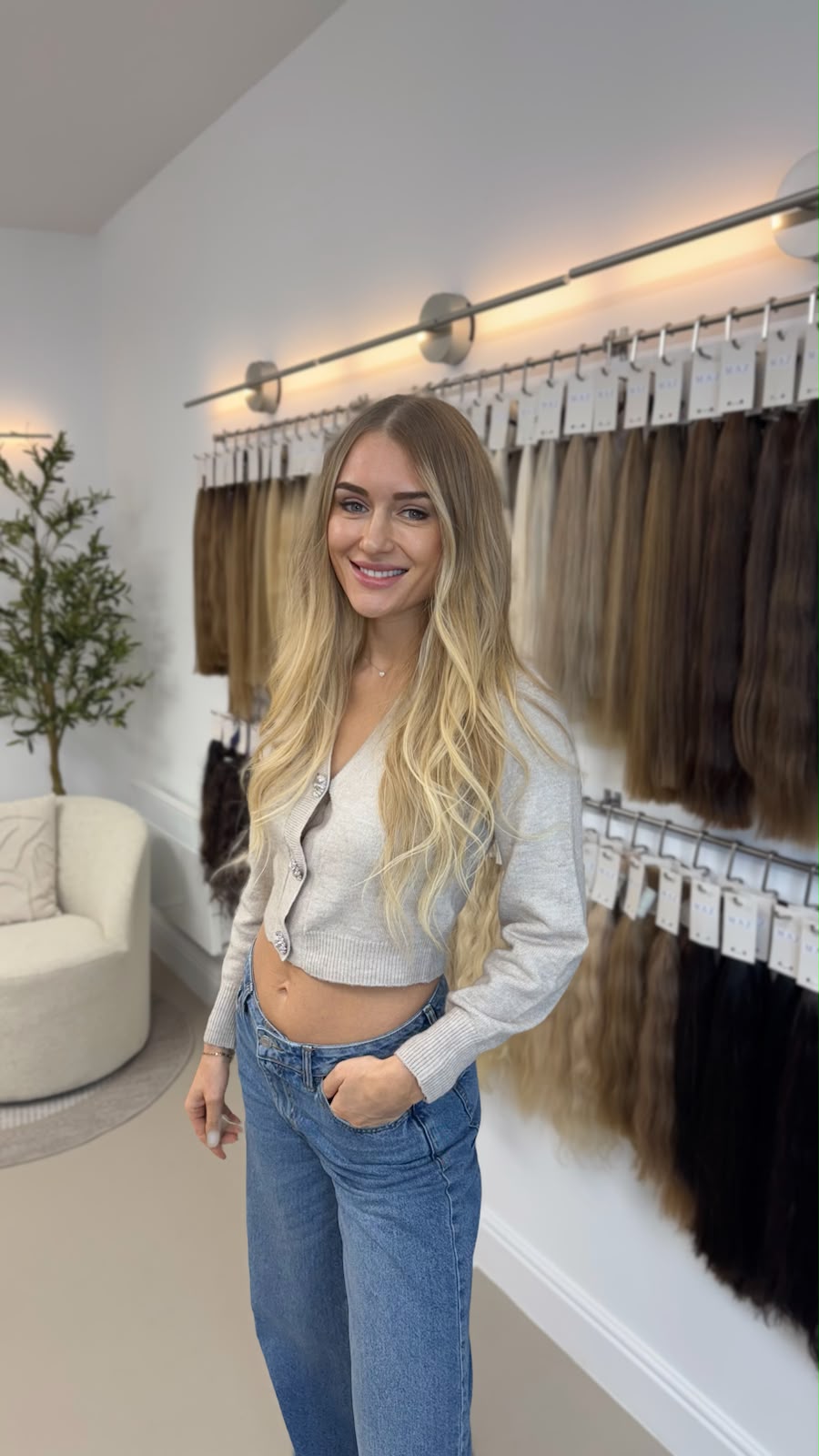
Colour is rarely one colour
Built from several shades, then checked against the light you live in.

Nobody has one colour on their head. Matching one shade to it just makes the added hair look printed on.
Roots, mid-lengths and ends are almost never the same. Neither is the way daylight and studio light treat them. So I blend from several shades and hold the result against your own hair in more than one light before I commit to it. I do the same for the ends, which are usually lighter and finer than anyone expects.

Who I work with
I would rather turn work away than fit something that will not hold.
- Fine hair and delicate hairlinesSmaller bonds, less hair, careful placement
- Curly and coily textureMatched wet and air-dried, shrinkage planned for
- Grown-out or previously fitted hairAssessed before anything is added
- Length and density, honestly assessedWhat your own hair can carry, not what you'd like it to
If your hair is not in a state to carry extensions yet, I will say so at consultation. That conversation is free and it is the most useful thing I can give you.
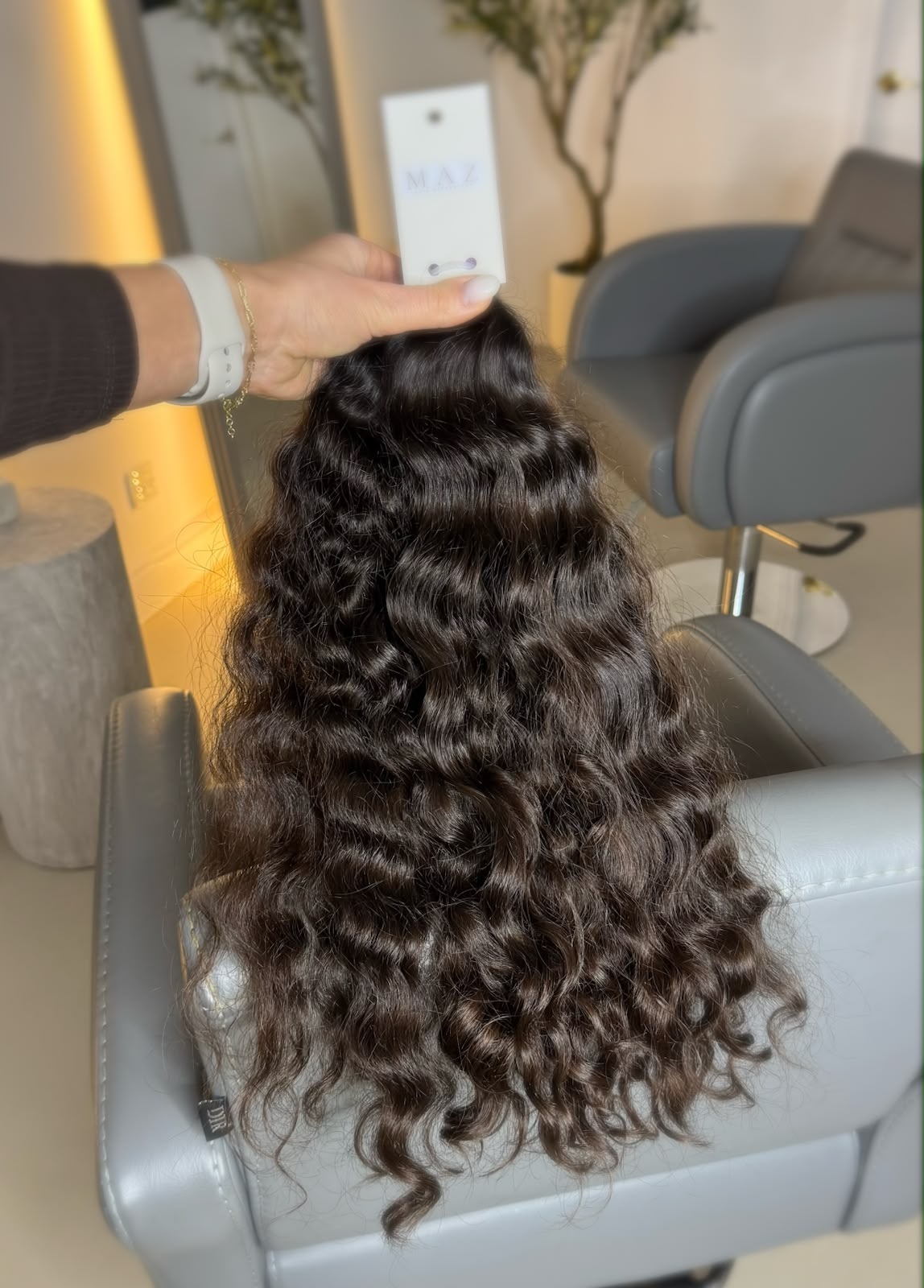
The hair library
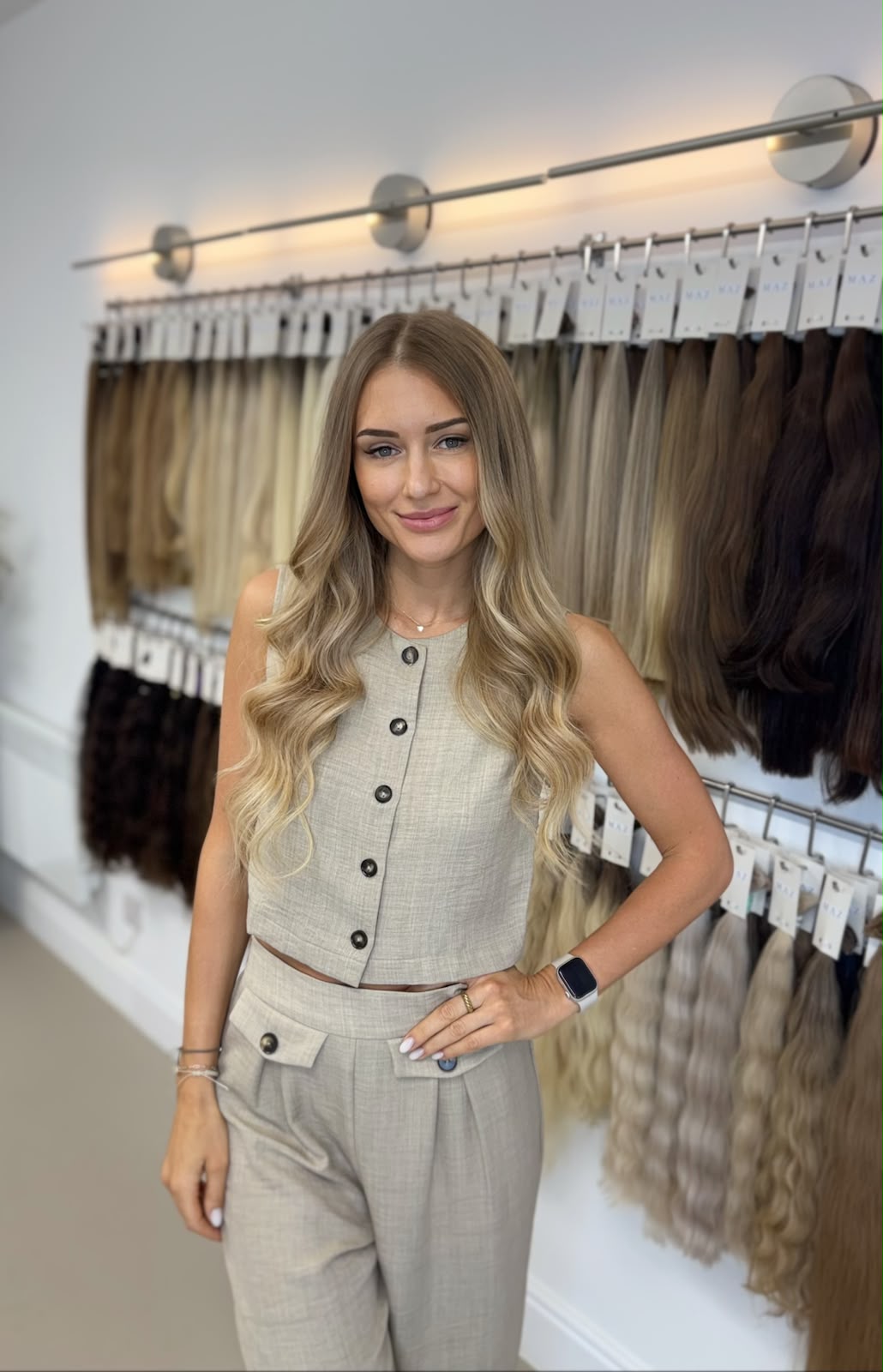
Around 10kg of hair, so I am choosing rather than ordering.
Every bundle is washed before I trust it. Texture is a spectrum, not four categories, and the only way to know what a bundle really does is to wash it and let it dry on its own, exactly as you will at home.
Selected from in person at consultation.
In the studio, before anything is booked.
Maintenance planned from the first fitting.
Finished work
Three sets, photographed from the angle that tells the truth.
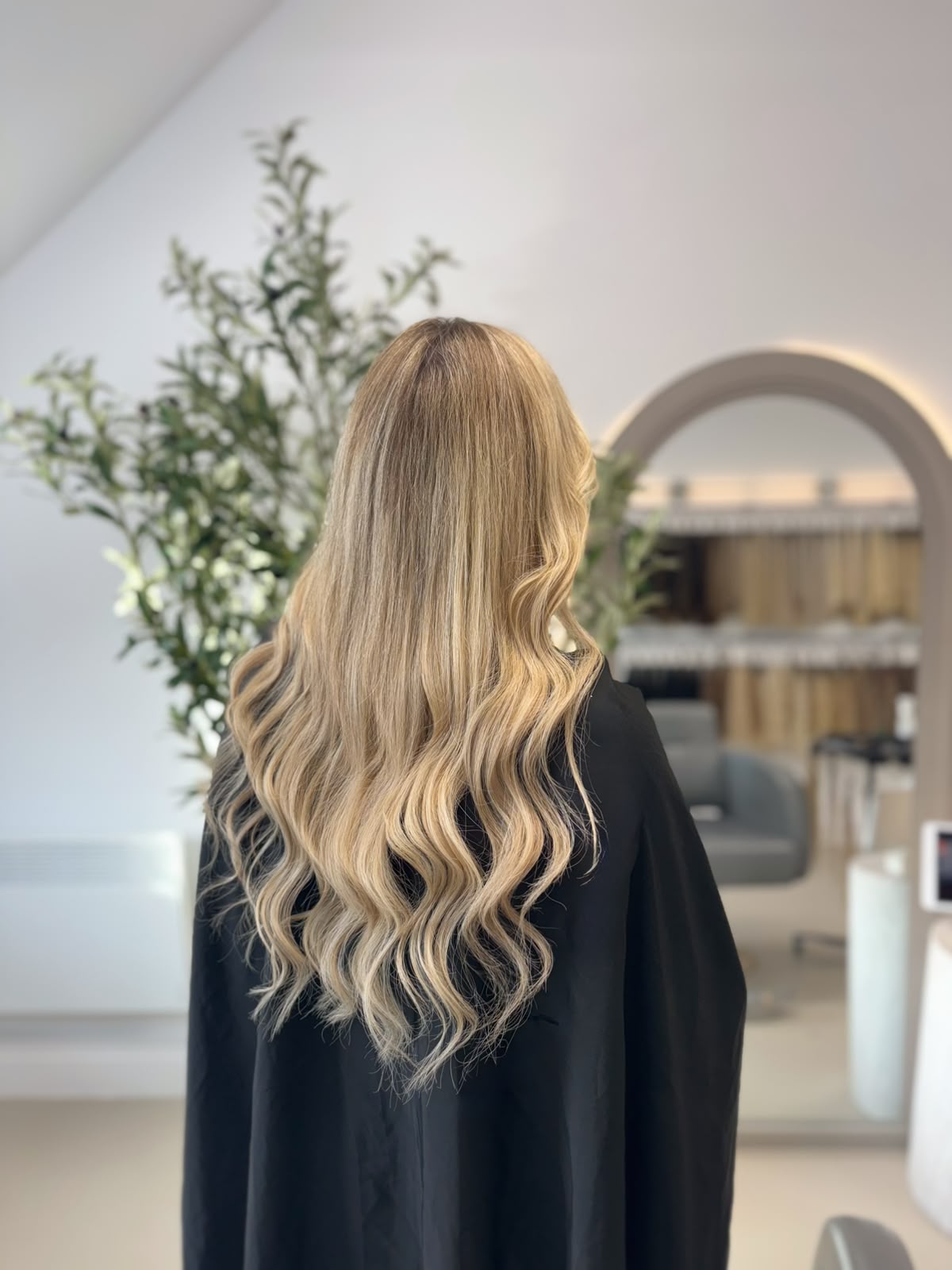
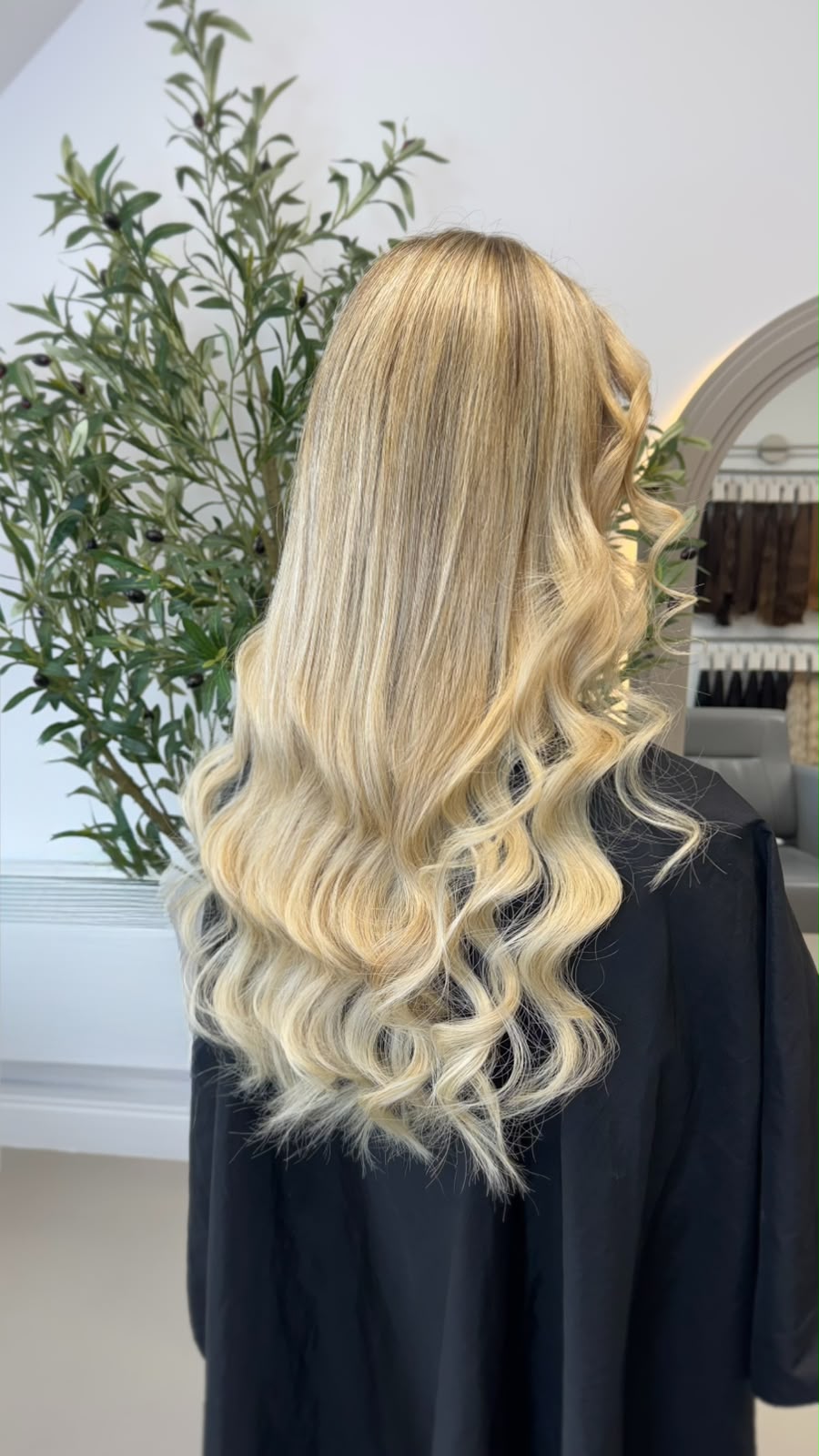
Blonde balayage, blended down through the ends
Built from more than one shade so the root stays deeper than the lengths. The ends are deliberately finer. Added density that stops in a blunt line is the fastest way to make a set look fitted rather than grown.
- MethodIndividual keratin bonds
- ColourMulti-shade blend, root through ends
- PhotographedStudio light, styled
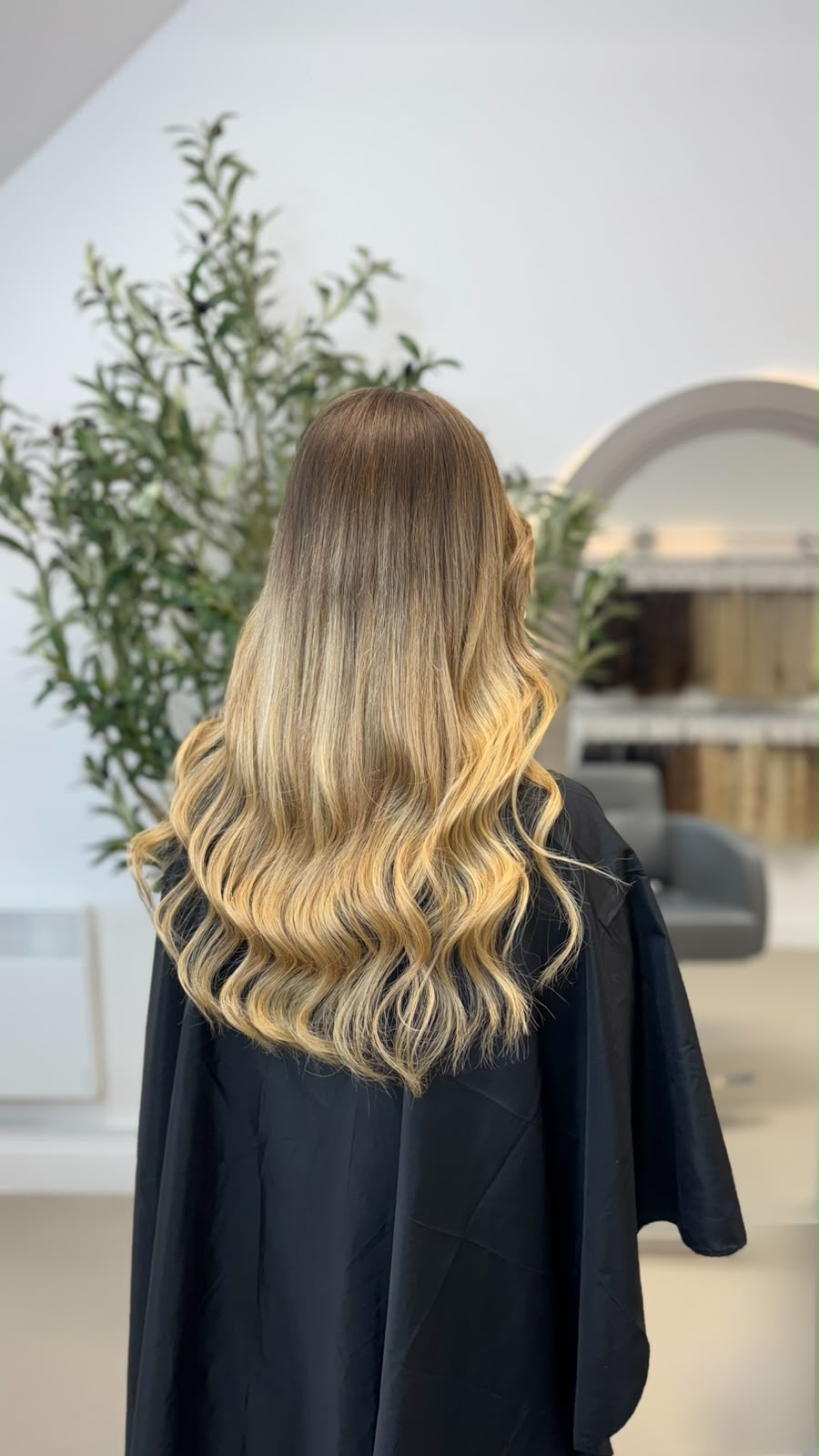
Bronde, seen from directly behind
The back is where a match is won or lost, because it is the one angle you never check yourself. Warm mid-brown through the root, softening down, matched to the wave in the client's own hair rather than smoothed straight to hide the join.
- MethodIndividual keratin bonds
- TextureMatched to a natural soft wave
- PhotographedBack view, unstyled fall
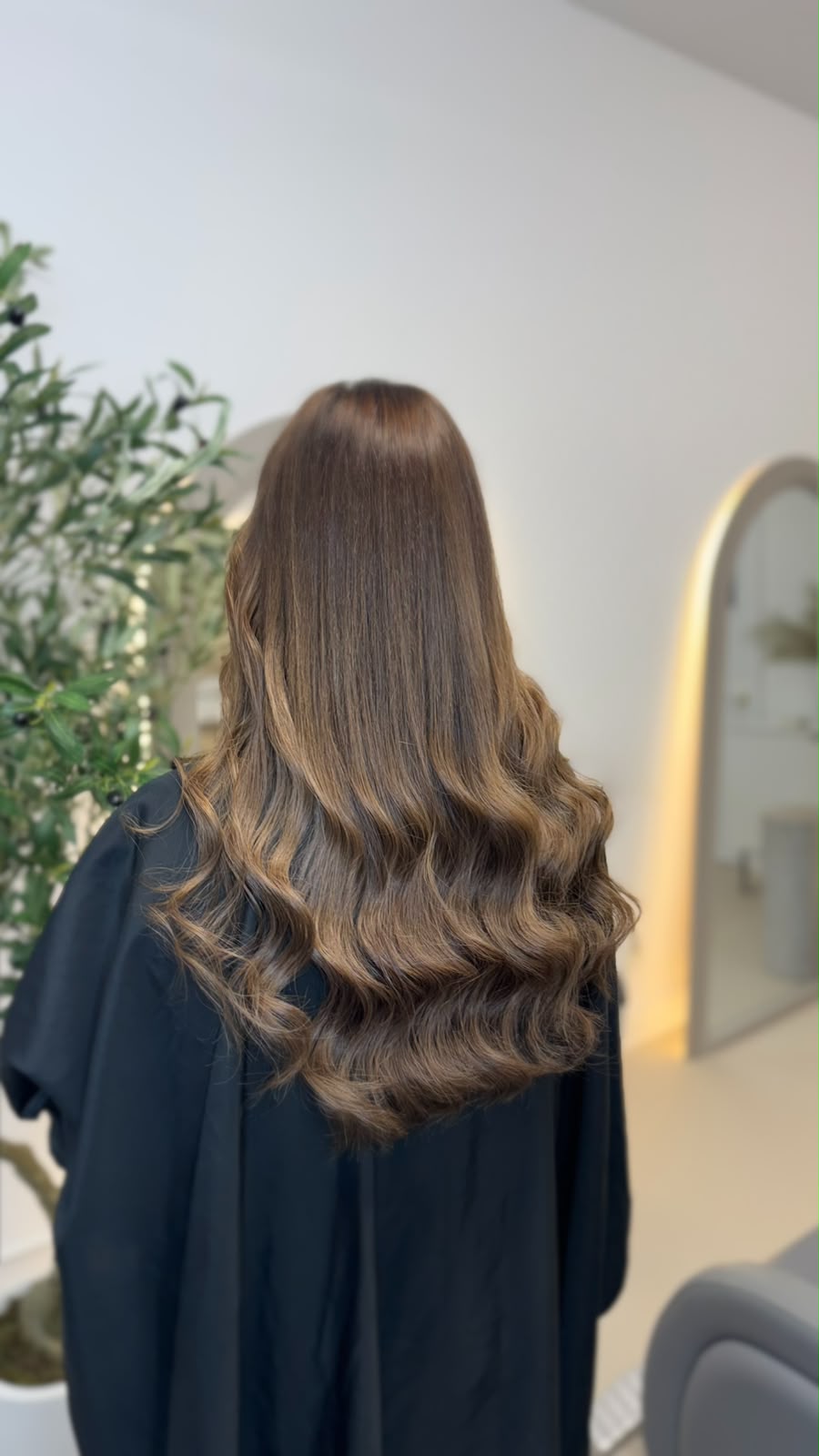
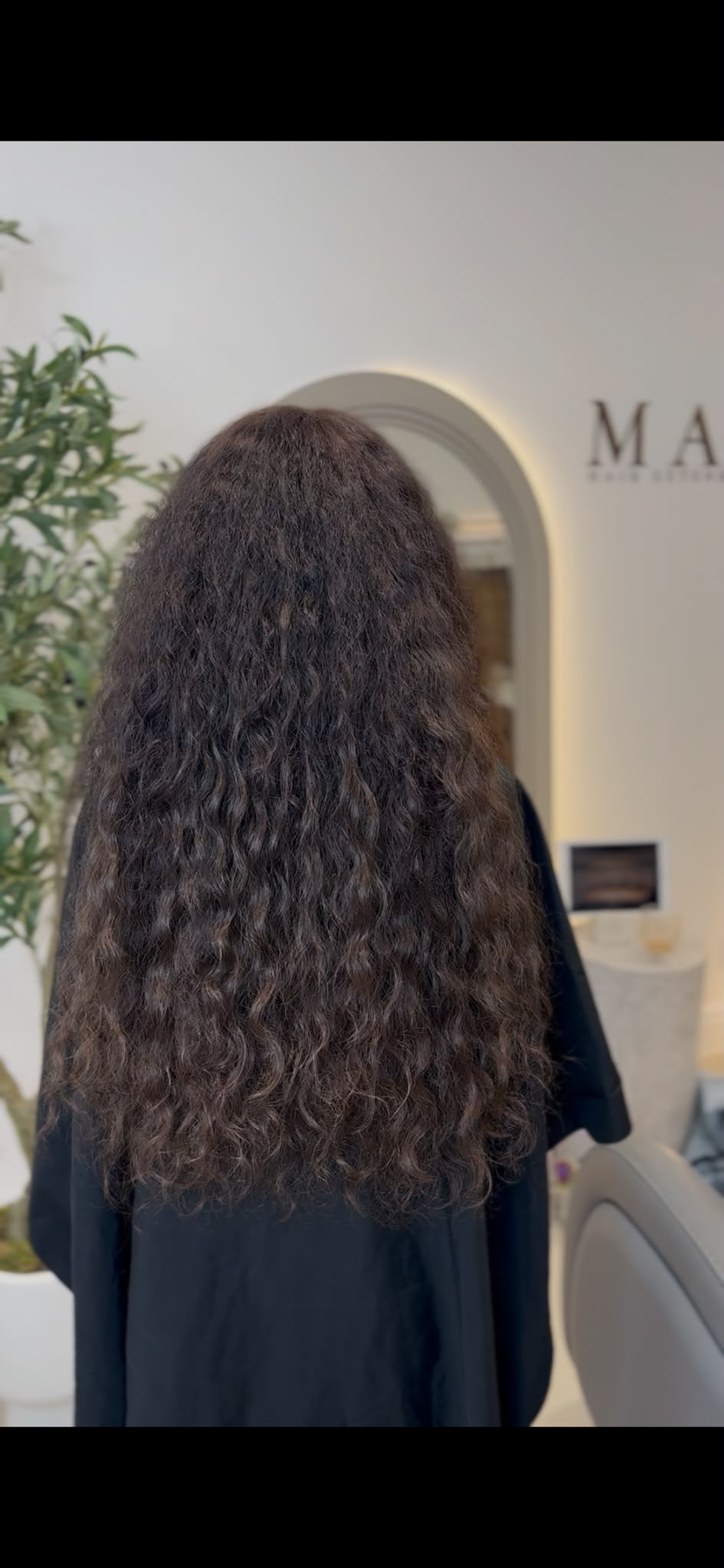
Brunette, glossed and left to fall
Dark hair is the least forgiving: every join catches the light. Bond placement is set back from the parting and staggered, so nothing lines up in a row when the hair is brushed flat.
- MethodIndividual keratin bonds
- PlacementStaggered, set back from the parting
- PhotographedBack view, brushed through
New to MAZ
What happens after you send an enquiry.
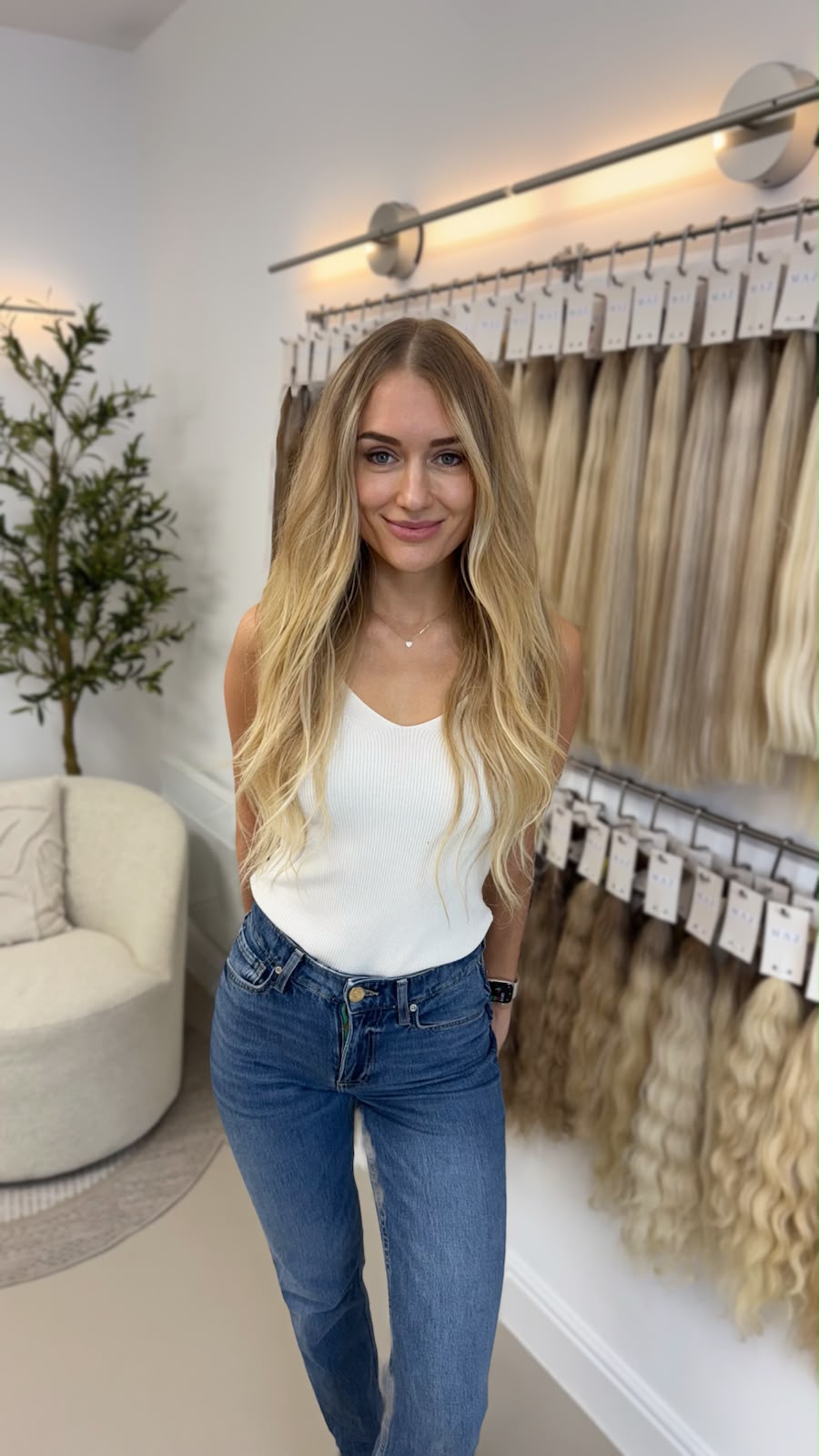
01 · The online assessment
Everything starts with the enquiry form. It asks about your hair, what you want from it and what has been done to it before. I read every one myself. It is not a booking request, it is the beginning of the match.
02 · Air-dried photos, and why
I ask for photographs of your hair washed and left to dry on its own: no heat, no product, no styling. Styled hair tells me what you can do with a brush. Air-dried hair tells me what I am actually matching.
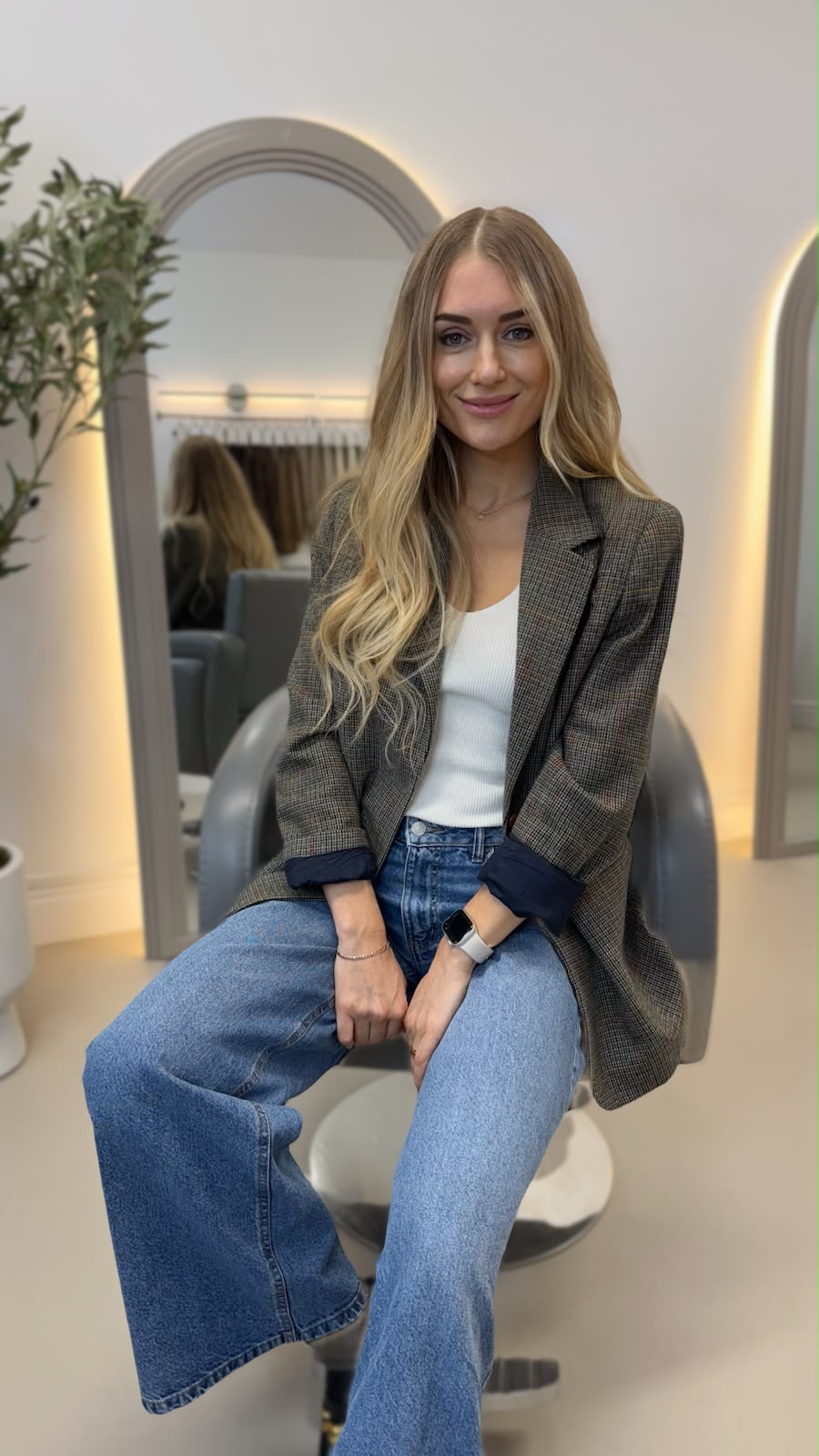
03 · The 40-minute consultation
In the studio, in person, before anything is booked. We go through what your hair can carry, what you want, and whether extensions are the right answer at all. If they are not, I will tell you.
04 · Hair selected from the library
We choose from the library together: around 10kg of hair, every bundle already washed and dried on its own so I know how it behaves. Texture first, then colour built from more than one shade.
05 · Fitting, then the 8–10 week cycle
Bonds are placed section by section, sized as I go. After that you are on a maintenance cycle of roughly eight to ten weeks, and in most cases the hair itself can be re-used and re-bonded rather than replaced.
The studio
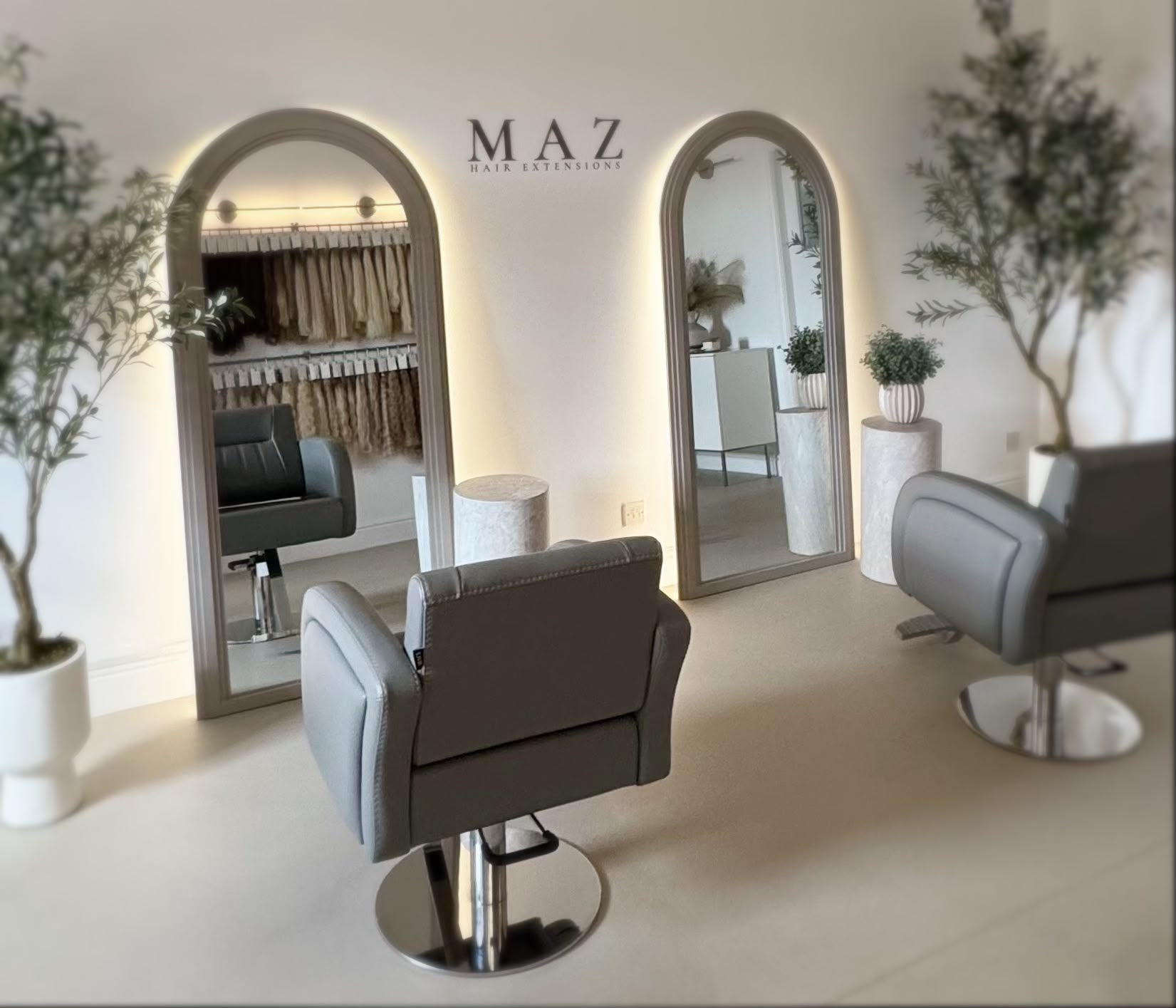
One client at a time, in a private studio in Telford.
No salon floor, no overlapping appointments, no rushing a fitting because someone is waiting. The arches and the backlit mirrors are there for one reason: I need to see hair in even, honest light for hours at a time.
If you are already a client, repeat appointments are booked through Ovatu, and the link is below. If you are new, everything begins with the enquiry.

The studio is private, so the map shows Telford rather than a shopfront. The exact address is confirmed with you directly once your appointment is arranged.
Questions
The things I am asked most often.
If yours isn't here, put it in the enquiry form. I answer them myself.
Existing client booking
Already a client? Book your maintenance appointment through Ovatu.
This is for existing clients only. If you have not been fitted at MAZ before, please start with an enquiry instead. I cannot fit anyone I have not consulted with.
Ovatu booking link not set yet. Paste it into OVATU_URL near the bottom of this file and this note disappears.
Start here
Tell me about your hair, and send me the air-dried photos.
Every set I fit begins with the same enquiry form: three short steps, and then a proper conversation. It is the only way in, whether you already know exactly what you want or have no idea where to start.
Enquiries are handled through the form on the New Clients page. Existing clients rebook through Ovatu here.